
WHAT IS POLYSTYRENE (EPS)?
Polystyrene is also known as Expanded Polystyrene (EPS), and is a lightweight, rigid foam plastic made up of 98% air and 2% plastic. It is widely used to protect electronics, appliances and other fragile items during transport due to its excellent shock-absorbing properties, making it a popular packaging solution across many industries.
EPS is also highly effective as insulation material and can be an environmentally responsible choice when managed correctly.
Despite its light weight, Polystyrene is bulky and can take up a significant amount of space in general waste bins. This can result in hidden disposal costs and logistical inefficiencies for businesses.
One of Polystyrenes key advantages is its ability to retain its properties throughout its lifecycle. As Polystyrene does not degrade or deteriorate throughout its life means that it is ideal for recovery and recycling from almost all applications.
WHAT TYPE OF POLYSTYRENE (EPS) CAN BE RECYCLED?
Clean and dry Polystyrene is essential to maintain the quality of recycled material. Contaminated or wet Polystyrene slows down processing and can damage recycling equipment. It also reduces the potential for the material to be repurposed into useful products like picture frames, skirting boards and construction materials.
To ensure the material can be recycled, polystyrene must be free from contamination.
Accepted Polystyrene must be:
 |
Clean, white and dry |
|
Rigid packaging used for protecting appliances and electronics |
A simple way to check if your item is Polystyrene (EPS): if you bend it and it snaps, it is likely EPS.
The following items are not accepted:
 |
Coloured polystyrene (e.g. grey or black) |
|
EPS contaminated with food, dirt, tape or stickers |
|
Foam meat trays, cups or packaging peanuts |
|
EPS that is wet or broken into small pieces |
|
Material contaminated with soil, concrete, render, glue, labels, ink printing or organic matter |
|
Bean bag beads |
COLLECTING POLYSTYRENE (EPS) ON THE NORTHERN BEACHES
Northern Beaches Council and Kimbriki host a FREE Polystyrene Drop-off Collection Day each month for residents, held from 8am to 4pm at The Hub, Kimbriki. Northern Beaches Council is encouraging their residents to bring their rigid pieces of 100% clean, white and dry Expanded Polystyrene (EPS) on designated collection days throughout 2026.
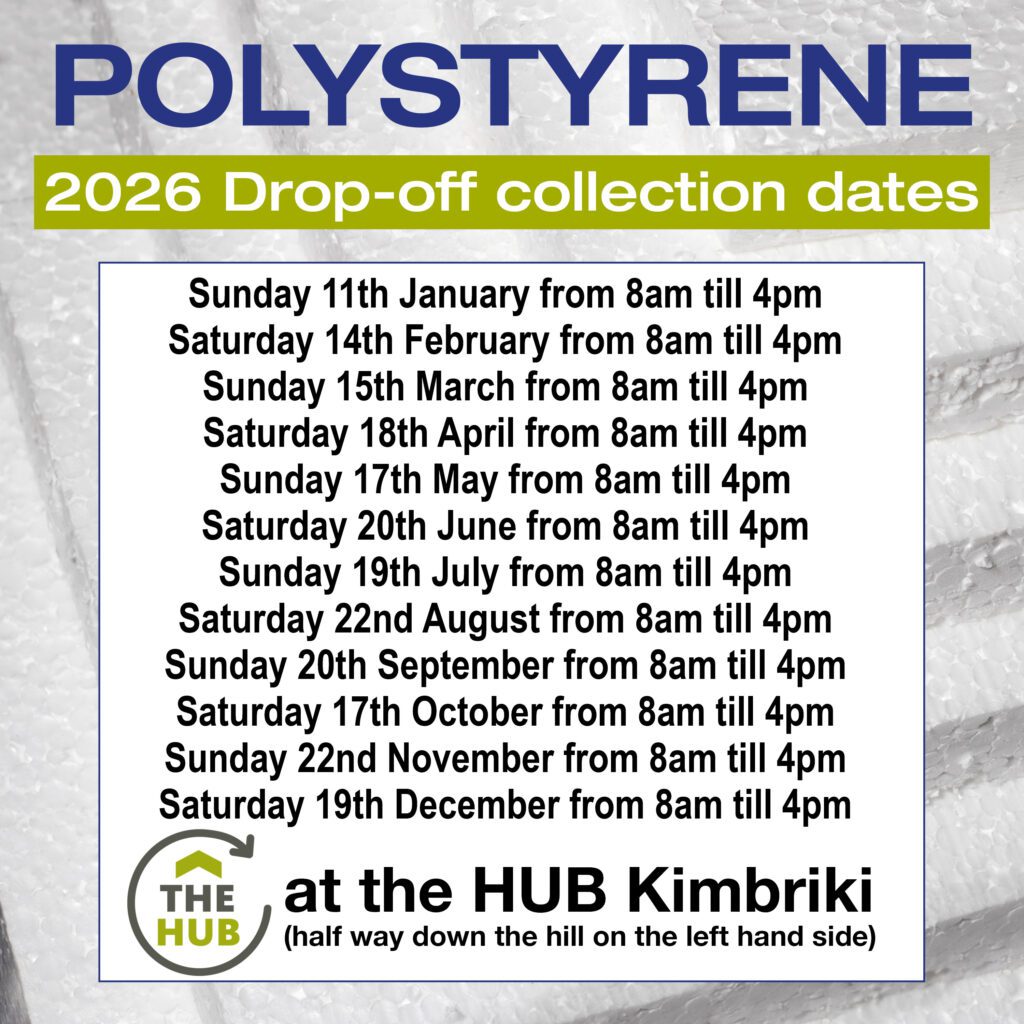
How much can Northern Beaches Council residents drop off on Collection days?
Domestic quantities only (equivalent to volume of your green vegetation bin, 240L)
HOW IS POLYSTYRENE (EPS) RECYCLED?
Polystyrene (EPS) is recyclable at many stages of its life cycle.
Once collected, the clean Polystyrene is compacted and transported to specialised recycling facilities.
Polystyrene is shredded and processed through a heat-based diffuser or extruder. This machine removes air, melting it into dense, solid EPS logs or briquettes, reducing its volume by approximately 2% of its original size, before being pelletised to manufacture new products.
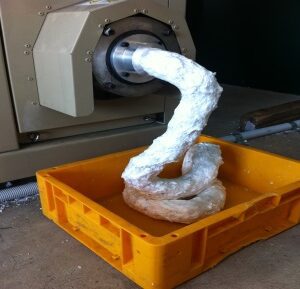
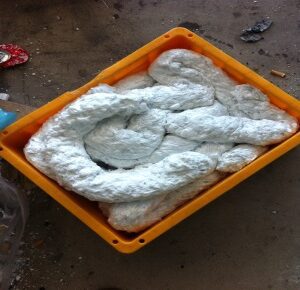
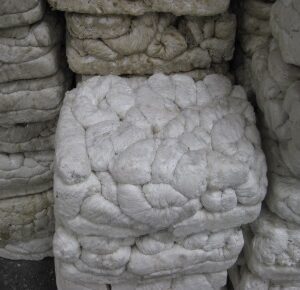
Using advanced ‘hot melt’ extrusion technology, the Polystyrene is compacted and fed into a granulation machine. The granulated material is then compressed and pelletised. These pellets become the feedstock repurposed into new products.
REMANUFACTURING
Polystyrene is transformed into durable products such as building materials, stationery, injection-moulded items, picture frames, decking, skirting boards, synthetic timber, outdoor furniture and insulation.
WHY YOU SHOULD RECYCLE YOUR POLYSTYRENE (EPS)?
- Gives your waste a second life and keeps it out of landfill.
- Recycling Polystyrene helps reduce your businesses and household’s environmental footprint, supports a circular economy and can be far more cost-effective than landfill disposal.
- Helps preserve valuable natural resources.
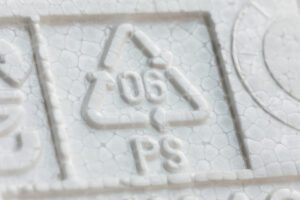
Styrofoam recycling symbol PS 06