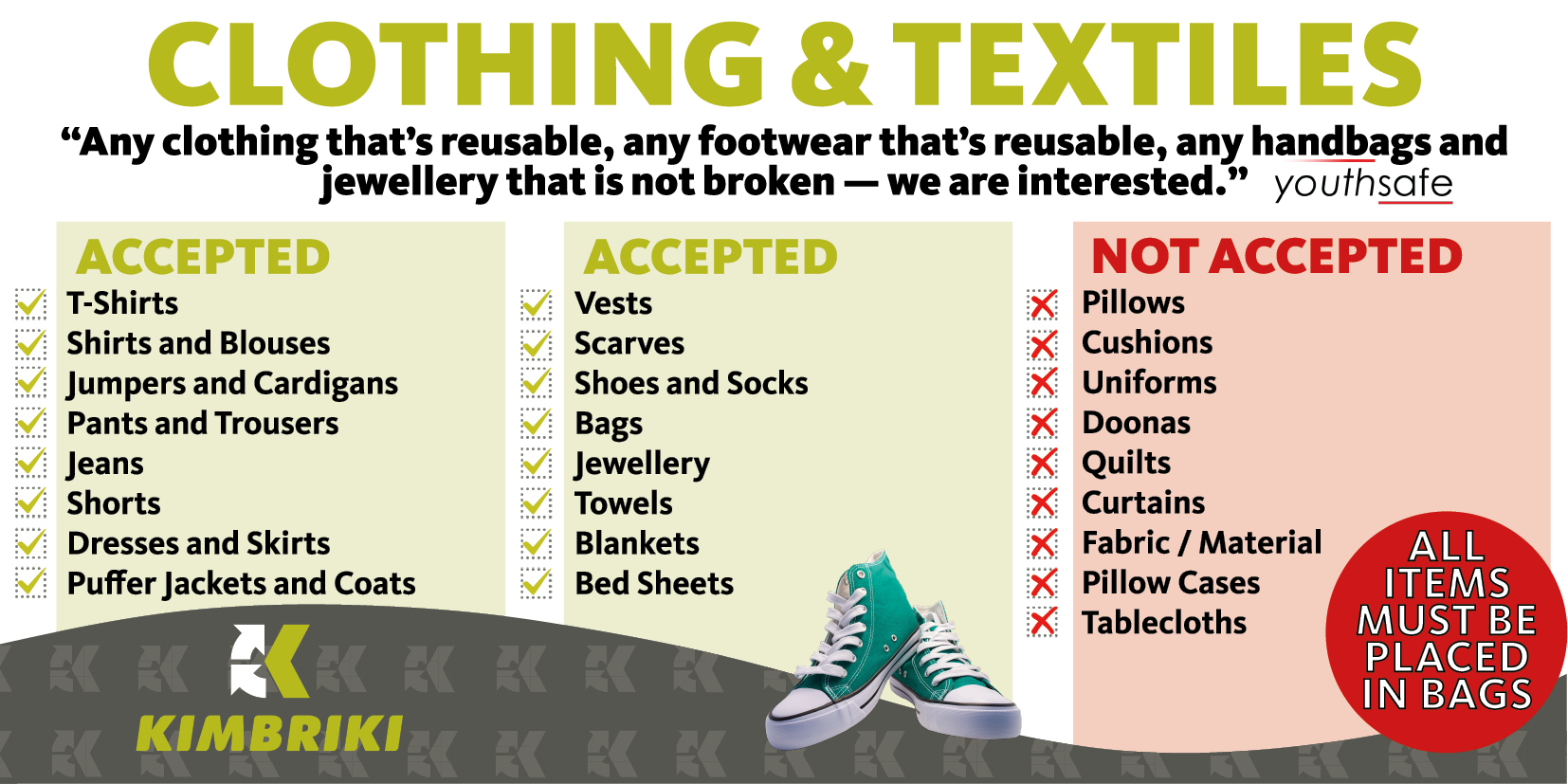
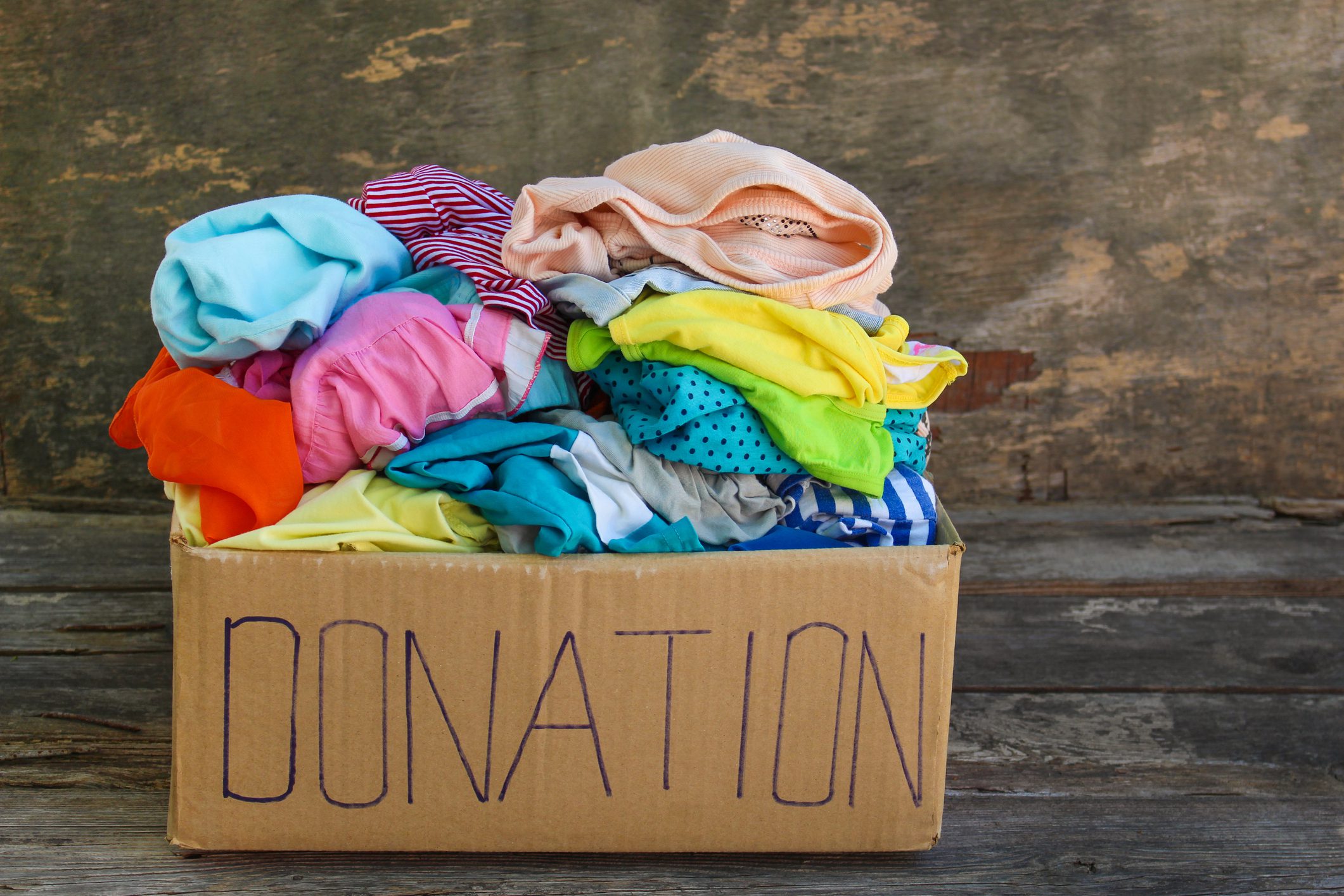
Kimbriki is home to six Youthsafe clothing bins, conveniently located in Area 3 – Household Problem Waste. We encourage our community to donate clean, reusable clothing and textiles, helping support a more sustainable approach to textile disposal in Australia through the Youthsafe program.
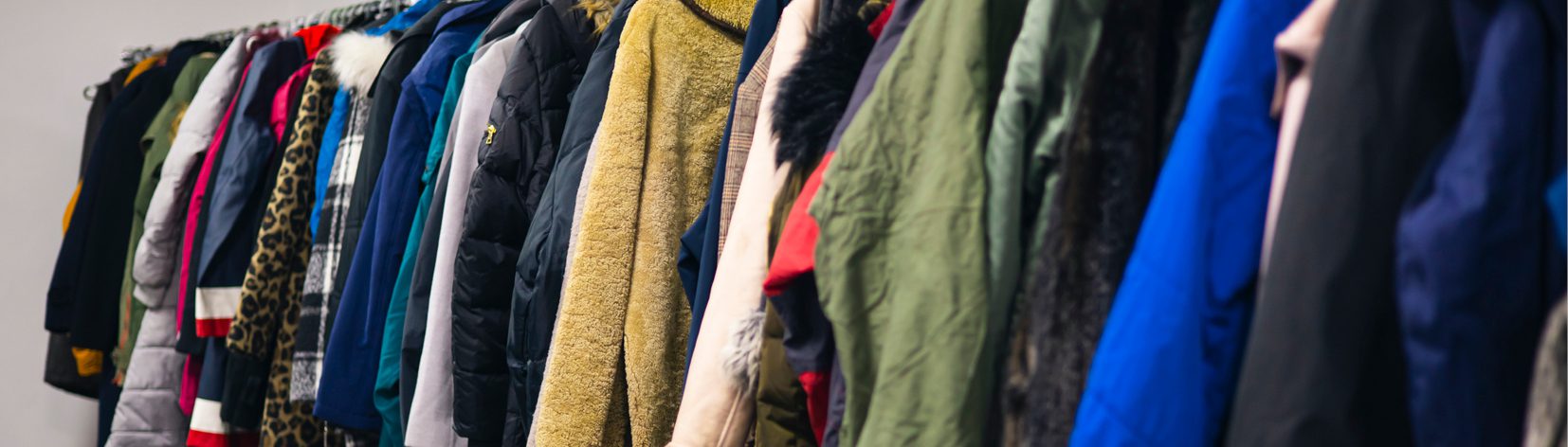
YOUTHSAFE CHARITY CLOTHING BINS PROGRAM
Donating clothing is a simple yet meaningful way for people of all ages to make a positive environmental impact. By choosing to donate unwanted clothing and textiles, we can help reduce waste, raise awareness about textile consumption and keep valuable resources out of landfill. At Youthsafe, clothing donation bins are a key fundraising initiative. Located across Sydney, these bins provide a convenient way for the community to donate clean, reusable clothing and textiles.
Did You Know?
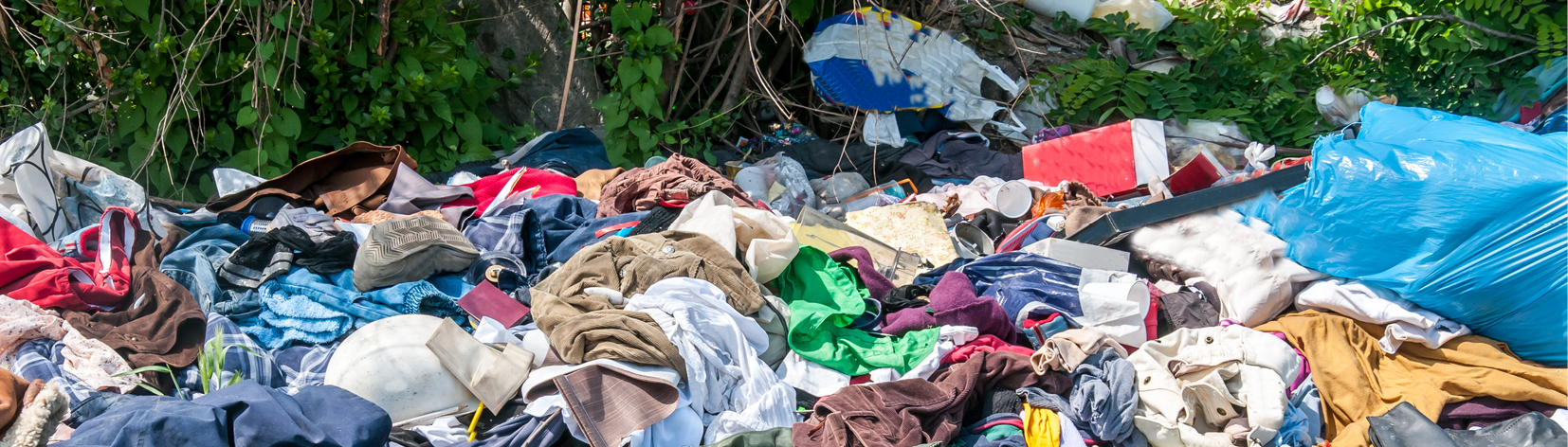
- More than 200,000 tonnes of clothing end up in Australian landfills each year, equivalent to the weight of almost four Sydney Harbour Bridges.
- Australians purchase an average of 56 clothing items each year, many of which are made from non-durable and non-sustainable materials.
- The average person wears only 40% of the clothes they own.
- Australia is the highest consumer of textiles per person in the world, surpassing even the USA.
- Every Australian sends an average of 23 kilograms of clothing to landfill each year, roughly the weight of a small suitcase.
- In landfill, textiles can take hundreds of years to decompose, releasing methane emissions and, in some cases, microplastics that can enter our waterways.
- The charitable reuse of clothing generates approximately $527 million annually for social welfare programs.
Kimbriki Community Impact
The 6 Clothing Bins at Kimbriki continue to make a significant contribution to textile recovery and reuse:
- April 2026: 10,248 individual clothing and textile items were donated, diverting 3.02 tonnes from landfill.
- May 2026: 7,806 individual clothing and textile items were donated, diverting 2.30 tonnes from landfill.
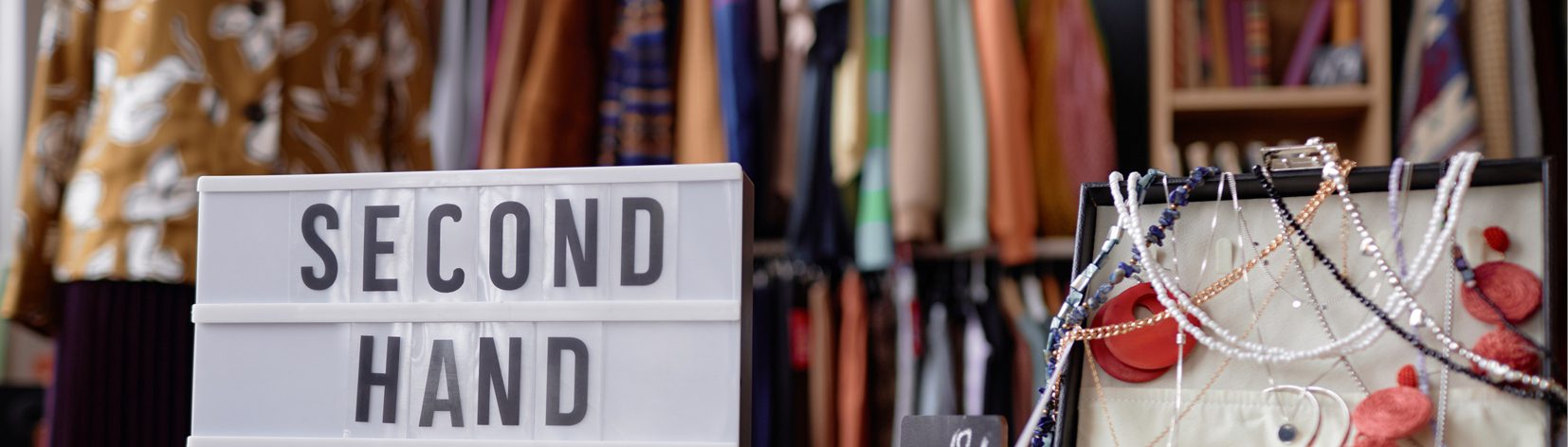
Every donation makes a difference. Understanding the journey of your donated clothing can inspire others to participate and make informed choices about how they dispose of unwanted textiles. Together, we can reduce waste, support charitable initiatives and contribute to a more sustainable future.
From donation to distribution: The lifecycle of your clothes via the Youthsafe clothing bin program.
Have you ever wondered what happens after you drop your old clothes into a charity bin?
The journey of your donated items is more complex and impactful than you might imagine.
Step 1: Collection process
Charity clothes bins are strategically placed in easily accessible locations. When you deposit items, they fall into a secure compartment. Trained staff or volunteers regularly empty these bins, ensuring donations are collected on time and without delay to maintain cleanliness and prevent overflow.
Step 2: Sorting and quality control
Once collected, your donations are transported to sorting centres. Here, skilled workers carefully inspect each item, separating them into categories based on quality and type. High-quality items suitable for resale are set aside, while damaged or stained clothing may be repurposed or recycled.
Step 3: Cleaning and preparation
Clothes that are suitable for resale undergo a thorough cleaning process. This may involve washing, steaming, or dry cleaning, depending on the item’s material and condition. Once they are cleaned, the clothes are pressed and prepared for distribution or sale in charity shops for youth in need.
Step 4: Distribution channels
Sorted and prepared items are distributed through various channels. Some are sent to charity shops for resale, while others may be allocated to direct aid programs. In some cases, certain charity shops that have excess clothing may sell them to secondhand clothing exporters to generate additional funds.
Step 5: Recycling and upcycling
Clothing donations that cannot be resold or redistributed are not wasted. Many charities have partnerships with textile recycling companies that transform unusable clothing into industrial rags, insulation materials, or even new fabric through innovative recycling processes, ensuring nothing goes to waste.
Step 6: Fund generation
The sale of donated items in charity shops or to secondhand exporters generates crucial funds for charitable organisations and helps them continue their work. These funds support various community programs, from providing essential services to those in need to funding research and advocacy work.