
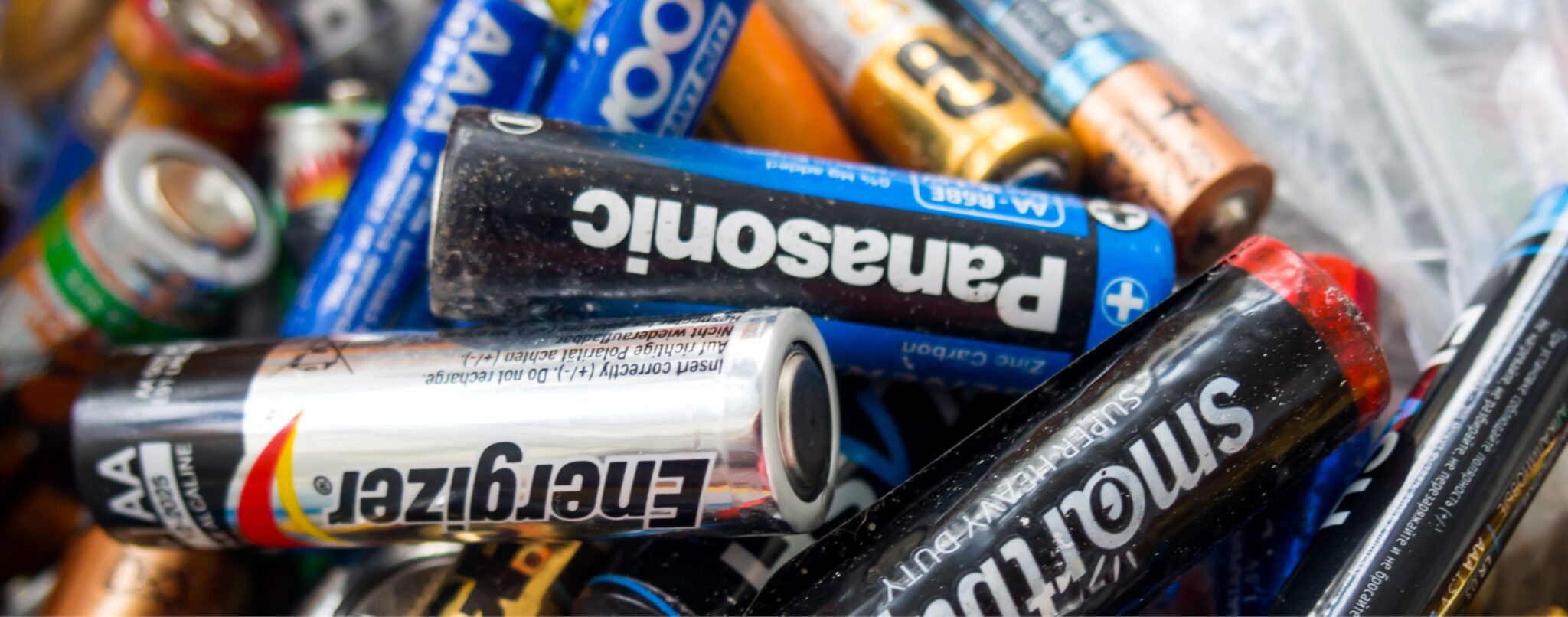
RECYCLE BATTERIES AND KEEP OUT OF GARBAGE BINS AND LANDFILL
These items can be difficult to recycle due to their complex mix of materials. It’s crucial to never put any batteries, especially lithium-ion batteries, in your kerbside bins (red, yellow, green) or landfill as they contain chemicals that can harm both people and the environment.
Maximum of a 2-litre container of batteries per visit free of charge.
Maximum of 10 bulbs or tubes per visit free of charge.
- If possible, remove the battery from the device.
- Store batteries in a cool, dry place like a plastic container.
- If the batteries are damaged, store them in an insulated plastic bag to prevent short-circuiting.
- Place in special bins located at Mixed Waste Drop Off 5.
- Please see below for items accepted and special conditions.

Household Batteries
- Household Disposable Batteries: – alkaline, lithium, zinc carbon, nickel, cadmium, mercury, and nickel metal hydride typically in sizes AAA, AA, C, and D size, or rectangular 9 and 12 volt batteries. They may also be customised to fit cameras, mobile phones, game consoles, power tools, electric toothbrushes and shavers.
Household Batteries contain harmful substances that can leak into the environment, so please don’t put them in regular garbage, if they go to landfill these might contaminate the land or groundwater. Many still have some charge, and they can spark against other metals and cause fires.
As well as Kimbriki, major retailers including Woolworths, ALDI, Bunnings and Officeworks have become drop-off points for household batteries. Householders can look online for their nearest drop-off locations.

Button Cell Batteries
- Button Cell Batteries: – all button cell batteries e.g. watches, hearing aids, calculators, toys.
Button Cell Batteries that are dumped in landfills or incinerated will leak mercury toxins into water supplies and food chains. They should be recycled and not put in with normal garbage.
Button Batteries are used in a wide variety of everyday items like hearing aids, watches and calculators. Many children’s toys are powered by or use button batteries to produce light or sound effects. In Australia, one child a month is seriously injured after swallowing, or inserting a button battery.
Lithium-ion Batteries
- Lithium Rechargeable Batteries: – Some of these come in familiar AAA and AA sizes, or may be customised to fit cameras, mobile phones, game consoles, power tools, electric toothbrushes, shavers, e-bikes and scooters.
Lithium-ion batteries and rechargeable batteries which are hazardous and could produce sparks that may start a fire in the trucks or recycling facility.